
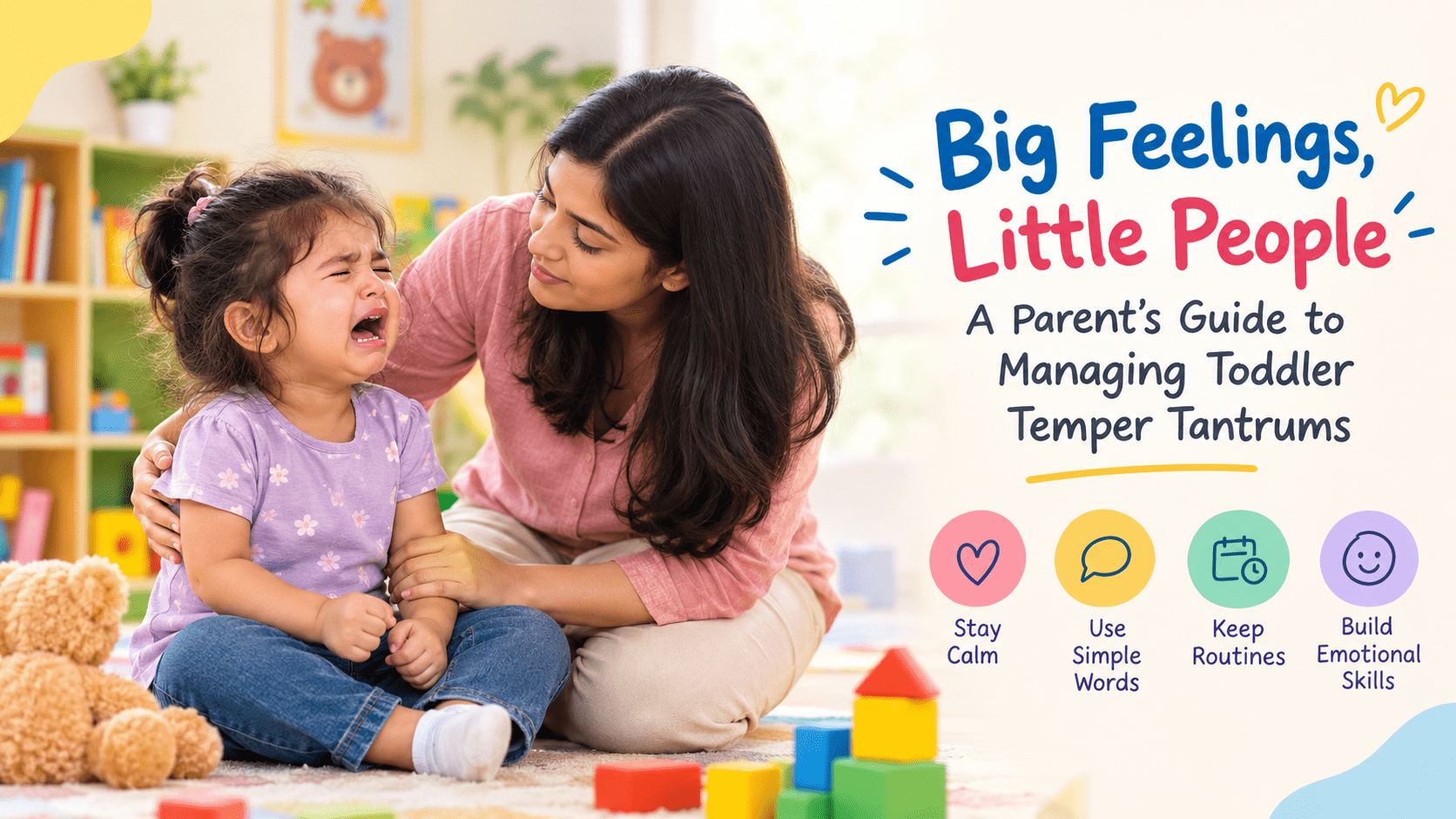
Toddler temper tantrums are a common part of early childhood. A child may cry, shout, refuse to cooperate or become upset when something does not go their way. While these moments can be challenging for parents, they are often connected to a child’s developing communication and emotional skills. A calm, supportive approach can help children gradually learn how to express feelings in healthier ways.
For parents exploring the Best preschool and daycare in Uttarpara, understanding how early-learning environments support emotional development can be just as important as looking at academics, activities and facilities.
Why Do Young Children Have Tantrums?
Young children experience strong emotions but are still learning how to manage them. They may not yet have the vocabulary to explain that they are tired, frustrated, disappointed or overwhelmed.
Common triggers include:
- Hunger or tiredness
- Difficulty communicating what they want
- Changes in routine
- Being asked to stop a favourite activity
- Wanting independence
- Feeling overwhelmed by noise or surroundings
- Difficulty sharing or waiting
A toddler temper tantrums does not necessarily mean a child is being deliberately difficult. It can be an opportunity to teach emotional awareness and communication.
Stay Calm During the Moment
One of the most useful things parents can do is regulate their own response. Raising your voice or reacting with anger can make an already difficult situation more intense.
Instead, use a calm voice and simple words. You might say, “I know you are upset. I am here to help.”
You do not have to agree with every demand to acknowledge the emotion behind it. This teaches children that their feelings are understood while boundaries can still remain firm.
Help Your Child Name Feelings
Children gradually develop emotional vocabulary through everyday conversations. Introduce simple words such as happy, sad, angry, worried, tired, and frustrated.
After your child becomes calm, talk briefly about what happened. For example:
“You were upset because playtime ended. Next time, you can tell me you need one more minute.”
Over time, children can begin replacing crying or shouting with words.
Offer Simple Choices
Young children often want a sense of independence. Giving two acceptable choices can reduce unnecessary conflict.
For example:
- “Would you like the blue cup or the yellow cup?”
- “Do you want to put your shoes on first or pack your bag first?”
- “Would you like to clean up the blocks or the puzzles?”
Choices give children some control while keeping the parent in charge of the overall decision.
Keep Routines Predictable
Regular routines can make daily transitions easier. Consistent times for meals, play, rest and bedtime help children know what to expect.
Transitions can be particularly difficult. Give advance warnings such as:
“Five more minutes, then we will put the toys away.”
A simple countdown or familiar routine can help a child prepare mentally for a change.
Encourage Positive Behaviour
Children need attention for positive behaviour too. Notice and acknowledge small efforts.
Instead of only reacting when your child becomes upset, point out moments when they communicate appropriately:
“You told me you were frustrated instead of shouting. That was a good way to explain it.”
This helps children understand which behaviours are useful and encourages them to repeat them.
Choose an Early-Learning Environment That Supports Emotional Growth
Preschool is more than learning letters and numbers. Children also practise sharing, taking turns, communicating, following routines and interacting with teachers and classmates.
Parents searching for the Best kindergarten in Uttarpara may therefore want to consider how a school approaches social and emotional development alongside classroom learning.
Similarly, families looking for the Best daycare in Uttarpara can consider factors such as caregiver interaction, routines, communication and opportunities for age-appropriate play.
What Parents Should Avoid
During a tantrum, avoid lengthy explanations. A child who is highly upset may not be ready to process a detailed lesson.
It is also helpful to avoid:
- Threatening or shaming the child
- Giving in to every demand just to stop the crying
- Comparing the child with other children
- Using labels such as “bad” or “naughty”
- Bringing up previous tantrums during a new situation
Set clear limits while remaining respectful.
When Your Child Is Calm, Teach
The best time to teach emotional skills is usually after the difficult moment has passed. Talk about what happened and practise alternatives.
You can use books, pretend play, drawings or simple role-play to explore situations such as sharing toys, waiting for a turn or saying goodbye to a parent.
At Angels Eden, age-appropriate activities and social interaction can provide children with opportunities to practise communication, cooperation and confidence in a supportive setting.
Supporting Children Beyond the Home
Parents searching for the Best preschool and daycare in Newtown can look for environments where teachers understand that young children are still developing emotional and communication skills.
A consistent approach between home and preschool can make learning easier. Parents and teachers can share observations about triggers, successful calming strategies and routines that work well for the child.
Families considering the Best kindergarten in Newtown can also look beyond academic activities and ask how children are encouraged to participate, communicate and interact with others.
For working parents, the Best daycare in Newtown should also provide an environment where children receive appropriate care, attention and opportunities for meaningful activities.
Helping Children Build Emotional Confidence
Tantrums generally become easier to manage as children develop language, independence and self-regulation. Parents cannot prevent every emotional outburst, but they can help children learn from these experiences.
Families exploring the Best preschool and daycare in Rajarhat can consider whether the learning environment provides opportunities for play, communication and positive social interaction.
Parents looking for the Best kindergarten in Rajarhat may also benefit from choosing an environment that encourages children to express themselves while learning classroom routines.
For families searching for the Best daycare in Rajarhat, a caring and structured setting can complement the emotional skills children are developing at home.
Final Thoughts
Temper tantrums can be exhausting, but they are also moments when children are learning. Stay calm, acknowledge feelings, maintain reasonable boundaries and teach simple ways to communicate. With patience and consistency, children can gradually become better at understanding and managing their emotions.
The goal is not to eliminate every big feeling – it is to help children learn what to do with those feelings as they grow.